CakeShop — Full-Stack E-Commerce Bakery Platform
A modern full-stack e-commerce application for a bakery business featuring product catalog management, promotional offers engine, cart & checkout flow, Kanban-style order management, and Cloudinary-powered media delivery.
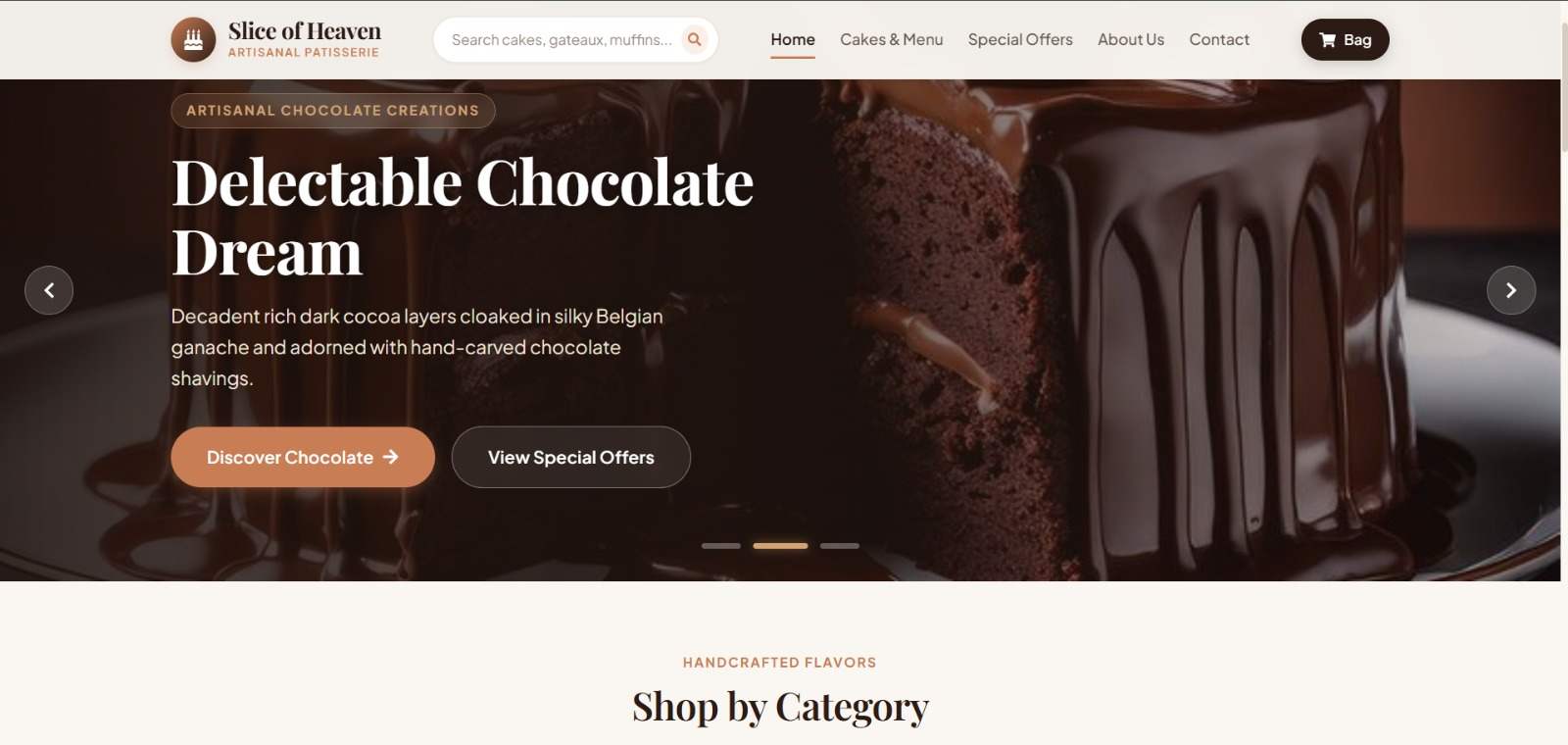
Project Overview
CakeShop is a full-stack e-commerce web application designed for an artisan bakery business. It delivers a complete online storefront for customers — from product browsing and category filtering to a fully functional cart, checkout, and order placement flow — alongside a dedicated admin dashboard for product inventory management, promotional offer creation, and Kanban-style order fulfillment tracking.
Problem Statement
Small-to-medium bakery businesses typically rely on manual order-taking via phone calls, WhatsApp messages, or walk-in visits — resulting in missed orders, pricing inconsistencies for promotional deals, no centralized inventory tracking, and zero visibility into order pipeline status for fulfillment teams.
Project Goals
- Customer-Facing Storefront: A polished, responsive product catalog with category-based filtering, detailed product pages, and a seamless cart-to-checkout experience.
- Promotional Offers Engine: Admin-managed time-bound promotional deals with discount pricing, savings calculations, and direct offer-to-order conversion.
- End-to-End Order Flow: Complete order lifecycle from cart checkout through customer details collection, delivery scheduling, and order success confirmation.
- Kanban Order Management: Administrative order board with status columns (Pending → Processing → Completed → Cancelled) and real-time status updates.
- Cloud-Based Media Pipeline: Cloudinary-integrated image upload and delivery for product and promotion imagery with automatic format optimization.
System Architecture
The platform follows a classic MERN-style architecture with a decoupled client-server design:
- Frontend: React 19 with Vite, React Router v7 for client-side routing, Axios for HTTP communication, and Context API for global cart state management.
- Backend & API: Express.js v5 RESTful API server with modular MVC architecture — organized into dedicated route, controller, and model layers per domain entity.
- Database: MongoDB with Mongoose ODM, utilizing a namespaced
cake-shopdatabase with cached connection instances across all collection models. - Media & Storage: Cloudinary CDN for product and promotion image upload, transformation (auto-resize to 800×800), and optimized delivery via Multer-Cloudinary storage middleware.
- Infrastructure: CORS-enabled API server, environment-based configuration via dotenv, and Nodemon-powered development workflow.
Key Features
- Category-Filtered Product Catalog: Dynamic product grid with type-based category routing (
/categories/:type) and regex-powered server-side product search by name. - Product Detail & Quick Order: Individual product pages with quantity selection and direct “Order Now” — bypassing the cart for single-item purchases.
- Smart Cart System: Context API-powered cart with add, remove, quantity update, clear, and persistent localStorage backup for checkout continuity.
- Promotional Offers with Savings Calculator: Admin offer creation form with real-time savings percentage calculation, date validation, and Cloudinary icon upload.
- Unified Order Processing: Single order pipeline supporting both regular product and promotional offer items with polymorphic item resolution (product vs. offer lookup).
- Kanban Order Board: Admin order management dashboard with status-grouped columns, inline status dropdown updates, and customer/delivery detail cards.
- Custom Cake Messages: Per-item “Message on Cake” input field during checkout with 50-character limit.
- Cloudinary Image Pipeline: Multer middleware with CloudinaryStorage adapter for automatic image upload, transformation, and CDN URL generation on product and offer creation.
Challenges & Solutions
Polymorphic Order Items (Products vs. Offers)
- Challenge: The order system needed to accept both regular products and promotional offers in a single order, each sourced from different collections with different field schemas (
PricevsDiscount_Price,Product_NamevsPromotion_Name). - Solution: Introduced an
isOfferboolean flag on order items. The backend controller conditionally resolves items against either the Product or Promotion collection, normalizing field names into a unified order item structure before persisting.
Cart Persistence Across Navigation
- Challenge: React Context state is lost on full page reloads, causing cart data to disappear when customers navigate away or refresh the browser.
- Solution: Implemented a localStorage-backed cart persistence strategy — serializing cart items to
localStoragebefore checkout and hydrating from storage on the Order Page when no navigation state is available.
Cloudinary Image Lifecycle Management
- Challenge: When a product image is updated or deleted, orphaned images remain in Cloudinary storage, consuming quota and creating stale references.
- Solution: Tracked
imagePublicIdon each product document. On update or delete operations, the controller explicitly destroys the previous Cloudinary asset viacloudinary.uploader.destroy()before uploading the replacement or removing the product record.
Lessons Learned
- Designing RESTful API architectures with modular MVC patterns using Express.js and Mongoose.
- Implementing cloud-based media pipelines with Cloudinary and Multer middleware for image upload, transformation, and lifecycle management.
- Managing client-side global state with React Context API and synchronizing it with localStorage for persistence.
- Building polymorphic data models that support heterogeneous item types within a single order document.
- Structuring a multi-role application with separate customer-facing pages and admin management views sharing a unified API layer.