Smart Shooting Gallery
An interactive IoT shooting gallery connecting physical targets with a real-time web platform for automated hit detection, scoring, and player analytics.
Project Overview
Smart Shooting Gallery is a full-stack IoT game platform that connects physical shooting targets with a web application in real time. The system combines React, Node.js, Express, MongoDB, Arduino, and ESP8266/NodeMCU hardware to detect target hits, calculate scores, and track player performance.
Problem Statement
Traditional shooting gallery systems often rely on isolated hardware and manual score tracking, making it difficult to provide real-time feedback, competitive rankings, and detailed player statistics. This project bridges physical target hardware with a modern web platform to automate hit detection, scoring, and game management.
Project Goals
- Real-Time Communication: Synchronize physical target events with the web application using WebSockets.
- Automated Scoring: Process target hits and update player scores in real time.
- Competitive Gameplay: Support multiple game modes, difficulty levels, and leaderboard rankings.
- Player Analytics: Track scores, progress, and performance statistics.
- Modular Architecture: Separate frontend, backend, database, and hardware components for easier maintenance and extension.
Key Features
- Real-Time Hit Detection: Physical target events are transmitted through ESP8266/NodeMCU and processed using WebSocket communication.
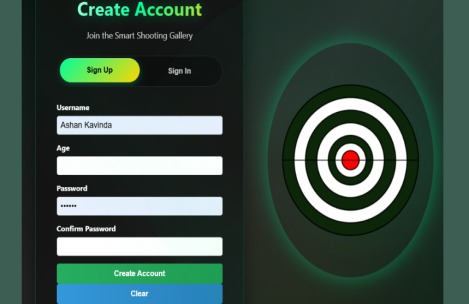
- Authentication System: User registration and login functionality for managing player accounts.
- Multiple Game Modes: Configurable gameplay modes with different difficulty levels.
- Score Tracking & Leaderboards: Automated scoring with competitive player rankings.
- Player Statistics: Track gameplay progress and performance over time.
- Hardware Integration: Arduino and ESP8266/NodeMCU components connect physical targets to the web application.
Lessons Learned
- Designing reliable real-time communication between physical hardware and web clients.
- Integrating embedded systems with a full-stack web application.
- Structuring a modular architecture across frontend, backend, database, and hardware layers.
- Implementing real-time game logic, automated scoring, and leaderboard systems.